
Zero Trust Security: Why Perimeter Defense is No Longer Enough
Zero Trust: The Only Security Model That Works
For years, organizations have relied on perimeter-based security, building firewalls and VPNs to keep attackers out. But here’s the bitter truth—this approach no longer works.
83% of organizations have experienced more than one data breach.
74% of breaches involve human error, privilege misuse, or social engineering.
Insider threats are growing, and attackers don’t need to "break in" when they can simply log in with stolen credentials.
Perimeter security assumes everything inside the network is safe—but attackers bypass defenses daily through phishing, supply chain compromises, and misconfigured cloud services. Once inside, they move freely, undetected.
Zero Trust: The Only Security Model That Works
Zero trust architecture (ZTA) operates on a simple yet ruthless principle:
> Trust no one. Verify everything.
Instead of assuming users, devices, and applications inside the network are safe, zero trust enforces strict, continuous verification at every step.
The Core Pillars of Zero Trust
1️⃣ Verify Everything – Every access request is inspected, authenticated, and authorized, no matter where it comes from.
2️⃣ Least Privilege Access – Users and systems get the minimum access needed to do their job—nothing more.
3️⃣ Continuous Monitoring – There is no implicit trust; behavior is analyzed in real time to detect anomalies and block threats proactively.
How to Implement Zero Trust (Before It’s Too Late)
🔹 Ditch the perimeter mindset – Assume breach is inevitable and focus on limiting attack impact.
🔹 Enforce identity-based access control – Require multi-factor authentication (MFA) and use risk-based conditional access.
🔹 Micro-segment networks – Prevent lateral movement by ensuring users and systems can only access what they truly need.
🔹 Monitor and respond in real time – Use AI-driven security to detect unusual behavior before damage is done.
The days of relying on firewalls and VPNs alone are over. Zero trust is not an option—it’s a necessity.
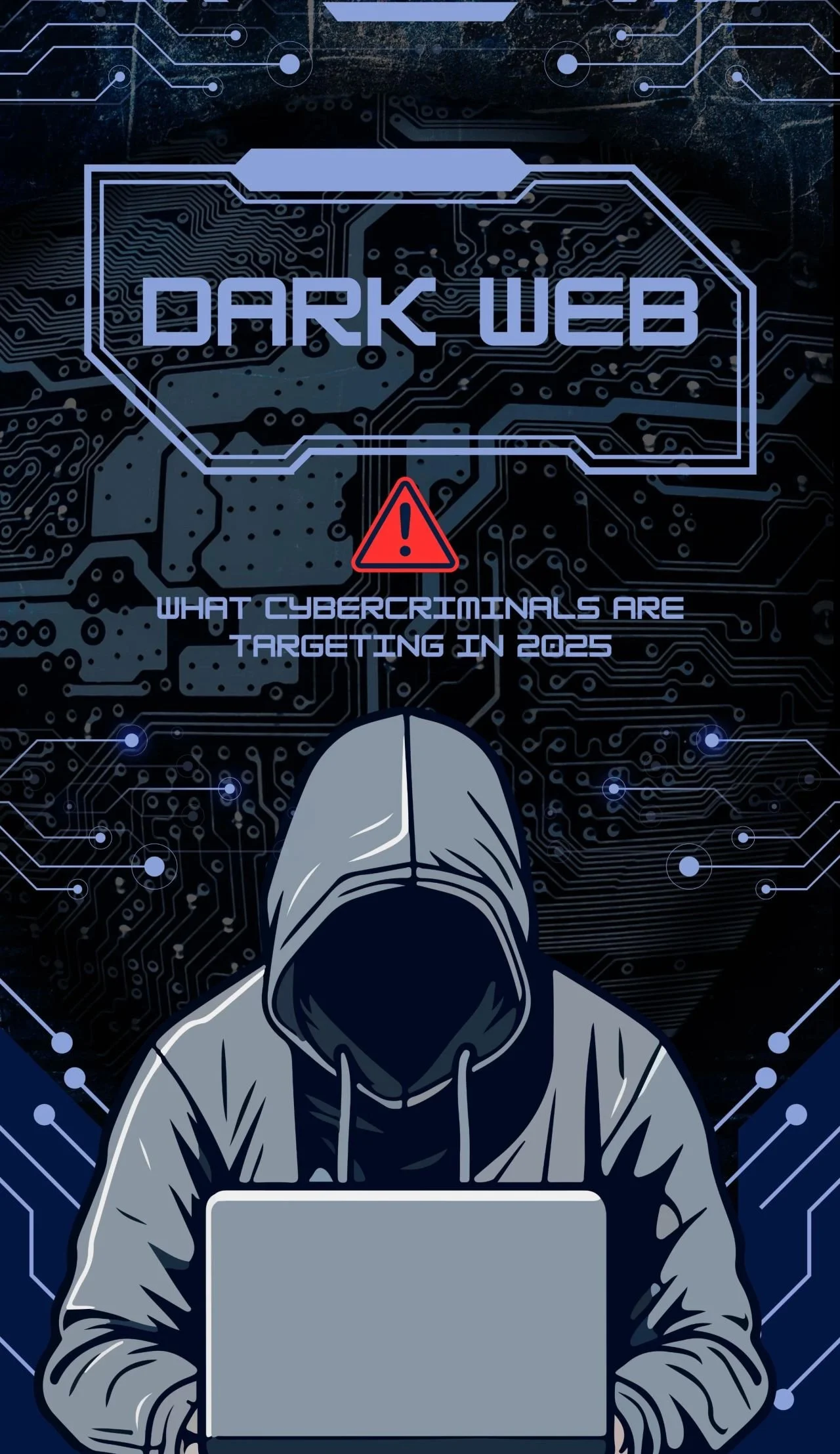
Dark Web Threat Intelligence: What Cyber criminals Are Targeting in 2025
The dark web isn’t just a hidden part of the internet—it’s an underground marketplace where cyber criminals trade stolen data, hacking tools, and exploits in real-time.
The dark web isn’t just a hidden part of the internet—it’s an underground marketplace where cyber criminals trade stolen data, hacking tools, and exploits in real-time. For organizations, ignoring this reality is a massive blind spot in security strategy.
What’s Being Sold on the Dark Web in 2025?
Stolen Credentials – Millions of login credentials from cloud services, financial platforms, and enterprise systems are up for sale, fueling account takeovers and business email compromise attacks.
Corporate Espionage – Insider threats are leaking sensitive corporate data—product designs, financial reports, and legal documents—giving competitors and hackers an edge.
Ransomware-as-a-Service – Cyber criminals no longer need technical skills. They can buy ready-made ransomware kits and launch devastating attacks on businesses of all sizes.
AI-Powered Attacks – Deepfake scams, AI-generated phishing campaigns, and automated hacking tools are being sold to bypass traditional security measures.
Industries Under Attack
Financial Services – Banks, fintech companies, and investment firms are prime targets for fraud, money laundering, and wire transfer scams.
Healthcare – Medical records are worth far more than credit card data, making hospitals and clinics goldmines for identity fraud and insurance scams.
Retail and E-Commerce – Stolen customer payment data, loyalty accounts, and refund fraud schemes are being sold to cyber criminals looking to exploit retailers.
Critical Infrastructure – Energy, telecom, and supply chain networks are being mapped for future cyber warfare. Attackers don’t just want money, they want control.
How Organizations Can Use Dark Web Intelligence
Monitor for Leaked Credentials – Threat intelligence teams track compromised employee logins and enforce immediate password resets and multi-factor authentication policies.
Identify Emerging Threats – By infiltrating dark web forums, security teams gain insights into new malware strains and attack tactics before they hit mainstream targets.
Strengthen Vendor Security – Third-party breaches often expose sensitive data, making supply chain security critical. Dark web monitoring helps businesses detect compromised vendors early.
Train Employees on Real-World Threats – Cybersecurity awareness programs should use real dark web attack methods to prepare teams for phishing, social engineering, and insider threats.
Final Thought: Dark Web Intelligence is Not Optional
Cyber criminals aren’t waiting—they’re evolving. If security teams only react to breaches, they’ve already lost. Organizations must go on the offensive, leveraging dark web intelligence to stay ahead of threats, disrupt criminal activity, and protect their most valuable assets.

The Role of AI in Cybersecurity: Threat or Defense?
Artificial Intelligence (AI) is reshaping cybersecurity in 2025, acting as both a powerful weapon for cyber criminals and a crucial defense mechanism for security teams.
Artificial Intelligence (AI) is reshaping cybersecurity in 2025, acting as both a powerful weapon for cyber criminals and a crucial defense mechanism for security teams. While AI enhances threat detection and response, it also fuels more sophisticated cyberattacks. So, is AI a bigger threat or a stronger defense?
How Attackers Are Using AI
AI-Powered Phishing: Attackers now use AI to craft highly personalized phishing emails, bypassing traditional security measures and tricking users with near-human precision.
Malware Evolution: AI-driven malware can adapt in real-time, evade detection, and modify itself to exploit new vulnerabilities, making traditional antivirus tools less effective.
Deepfake Scams: Cyber criminals use AI-generated deepfakes to impersonate executives in video calls, leading to fraud and data breaches.
How AI is Strengthening Cyber Defenses
Threat Detection & Response: AI-powered security tools analyze vast amounts of data in real time, identifying suspicious patterns and stopping attacks before they escalate.
Automated Incident Response: AI-driven security systems can automatically contain breaches, reducing response time and minimizing damage.
Fraud Prevention: AI helps financial institutions detect unusual transactions, preventing fraud before it impacts users.
How Businesses Can Leverage AI for Cybersecurity
1. Adopt AI-Driven Security Tools: Implement AI-based threat detection and response solutions to stay ahead of evolving threats.
2. Enhance Security Awareness: Educate employees about AI-driven attacks like deepfake scams and AI-powered phishing.
3. Invest in AI Research: Continuously refine AI security models to counter new attack techniques.
AI is not inherently good or bad—it’s a tool. Whether it becomes a threat or a defense depends on how organizations harness its power. The cybersecurity landscape is evolving, and AI will play a defining role in shaping its future.